Serving Ashtabula, OH and surrounding areas. (440) 755-8154
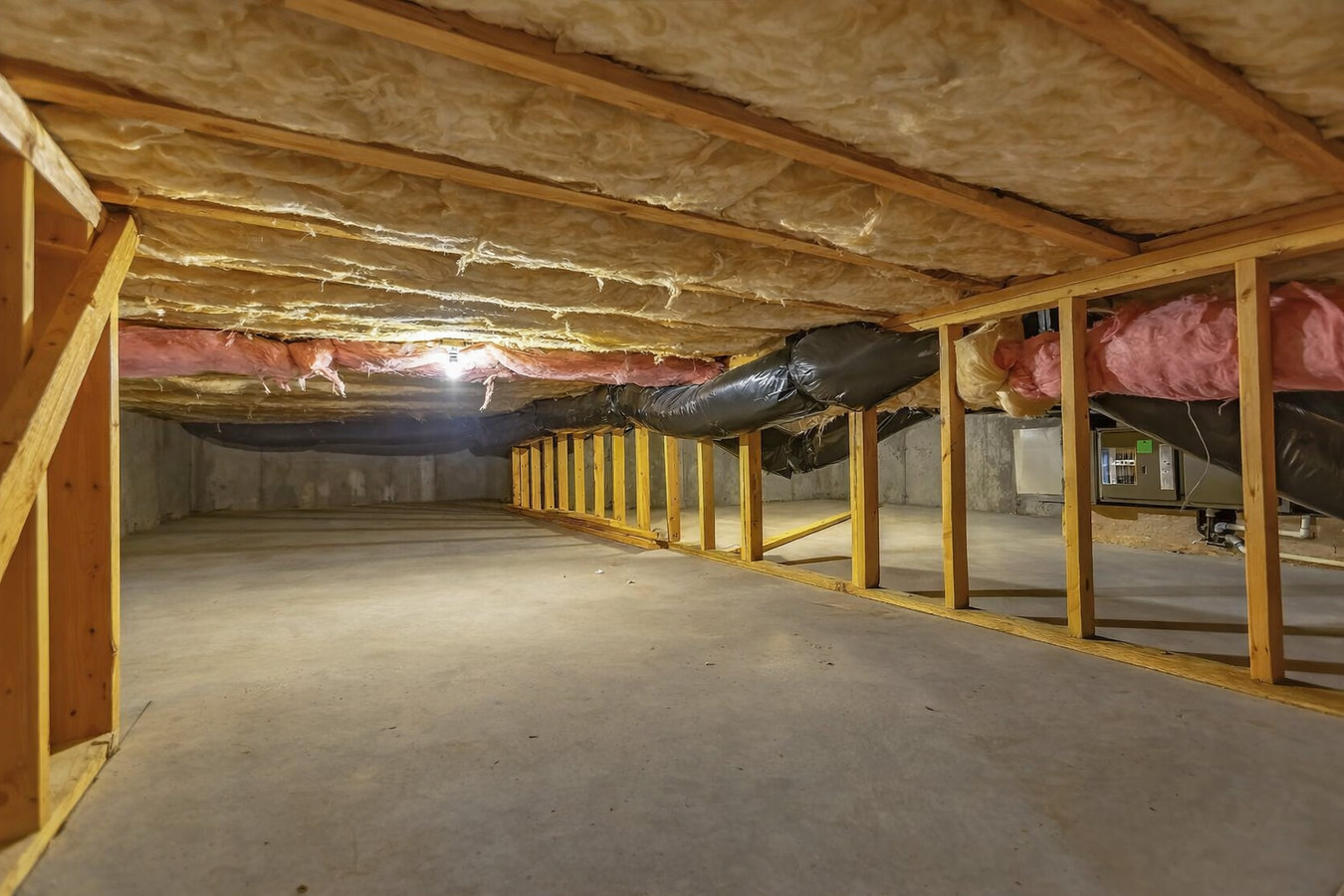
Cold floors and climbing heating bills are often a basement problem. We insulate, air-seal, and check for moisture - so the fix actually holds through an Ashtabula winter.
Basement insulation in Ashtabula, OH creates a barrier that keeps heat inside your foundation walls and floor system, with most residential jobs completed in a single day. If your first floor feels cold in January or your heating bill keeps climbing, the basement is usually where the heat is escaping - through bare concrete walls, uninsulated floor joists, and gaps around the rim joist at the top of your foundation.
Ashtabula has a large share of homes built in the early-to-mid 1900s, many with stone, brick, or block foundations that have more gaps and cracks than poured concrete. That means air sealing is often just as important as the insulation itself. Pair basement work with crawl space insulation if your home has both - the two spaces together account for a large share of a home's total heat loss.
The U.S. Department of Energy identifies basement insulation as one of the highest-return energy improvements a homeowner can make - particularly in cold-climate states like Ohio where heating season runs roughly six months of the year.
If the floors on your main level feel noticeably cold even when the heat is running, heat is escaping through an uninsulated or under-insulated basement. In Ashtabula, where temperatures regularly drop into single digits, cold floors are one of the most common complaints homeowners bring to insulation contractors.
If your gas or oil bill has climbed over the past few winters without an obvious reason, your basement may be where the heat is going. Older Ashtabula homes lose a surprising amount of heat through uninsulated foundation walls and rim joists - areas most homeowners never think to check.
The area where your home's wood framing sits on top of the concrete foundation is one of the most common spots for air leaks. Go into your basement and hold your hand near the top of the wall - if you feel cold air moving in, or you can spot gaps where light comes through, the space needs attention.
Ashtabula gets significant snowfall and spring rain, and older foundations often let moisture seep in. A musty smell after wet weather signals moisture is getting in - and if you are planning to insulate, that issue must be addressed first. A good contractor will flag this during the assessment.
We insulate basement walls and ceiling joists using spray foam, batt, or rigid board - and we recommend based on your foundation type and how you use the space, not whichever product is easiest to install. For unfinished basements with stone or block foundations, spray foam on the interior walls is usually the strongest choice because it fills irregular gaps and seals air in one step. For the ceiling above an unfinished basement, batt insulation between the floor joists is a proven, cost-effective option.
Every basement job includes rim joist sealing - the band of wood at the very top of your foundation that connects to your floor system. It is one of the most common spots for heat loss in an older home, and a contractor who skips it is leaving the biggest drafts untouched. We also check for moisture before anything goes in, and we will point you toward closed-cell foam insulation when moisture resistance is a priority for your foundation type.
Ideal for unfinished basements where the concrete or block walls are exposed and accessible.
Fits between the floor joists above an unfinished basement to stop heat from escaping up through the floor.
Addresses one of the biggest single heat-loss spots in an older home - included in every basement job.
We check for signs of water intrusion before any material goes in - the step that protects your investment long-term.
Ashtabula sits on Lake Erie in one of Ohio's heaviest lake-effect snow belts, regularly receiving over 100 inches of snow in a hard winter. That persistent cold puts real pressure on foundation walls and floors. Combine that with the older housing stock that makes up much of the city - many homes built before 1950 with stone, brick, or block foundations that were never designed to modern energy standards - and you have a situation where an uninsulated basement is not just uncomfortable, it is expensive. Heating season here runs about six months, and an uninsulated basement is a major reason those heating bills stay high.
Moisture is also a genuine local factor. Ashtabula's lake humidity, heavy snowmelt, and spring rain mean damp basements are extremely common, especially in older neighborhoods near the harbor. Homeowners in Conneaut and Geneva face similar conditions - and in all of these communities, insulating before checking for moisture is a mistake we make sure to avoid.
When you reach out, we will ask about your basement - finished or unfinished, any history of moisture, and roughly how large it is. We respond to every inquiry within 1 business day and schedule an on-site visit at your convenience.
We walk through your basement, check the walls and rim joist, look for moisture or existing insulation, and note any gaps that need sealing. This visit takes about 30-60 minutes and is a good time to ask any questions. There is no charge for this assessment.
After the assessment you get a written estimate that details what work is recommended, what materials we will use, and the total cost. What we quote is what you pay - no mid-job phone calls about unexpected add-ons.
The crew arrives, seals gaps and air leaks first, then installs insulation. Most jobs are done in a single day. Before leaving, we walk you through the finished work so you can see everything that was done and ask any final questions.
Free estimate, no obligation. We respond within 1 business day and come to your home before quoting.
(440) 755-8154We back every project with a written scope and a walkthrough when we finish. You have a clear record of the work, and we make that information easy to verify.
We inspect for water intrusion before we install a single piece of insulation. In Ashtabula, where lake humidity and older foundations are a real combination, skipping this step can turn an upgrade into a mold problem. We will tell you honestly if waterproofing needs to come first.
The rim joist - the wood band sitting on top of your foundation - is one of the biggest heat loss spots in an older home. We seal it as part of every basement job, not as an optional add-on. Skipping it leaves the biggest drafts untouched.
We have been working in Ashtabula and the surrounding area since 2019 and know what older foundations, stone and brick construction, and lake-effect winters actually demand from insulation work. That context shapes every recommendation we make.
The Insulation Contractors Association of America holds its members to professional and safety standards that protect homeowners - and we take that seriously in every job we do in Ashtabula.
Closed-cell foam is often the strongest choice for Ashtabula basement walls - it insulates and moisture-seals in one application.
Learn MoreIf your home has a crawl space instead of a full basement, crawl space insulation solves the same cold-floor and energy-loss problems.
Learn MoreAshtabula winters move fast - lock in your installation date now and go into the cold months with a warmer, more efficient home.